From operations to platform
The question
How do you turn fragmented last-mile operations into a scalable technology product?
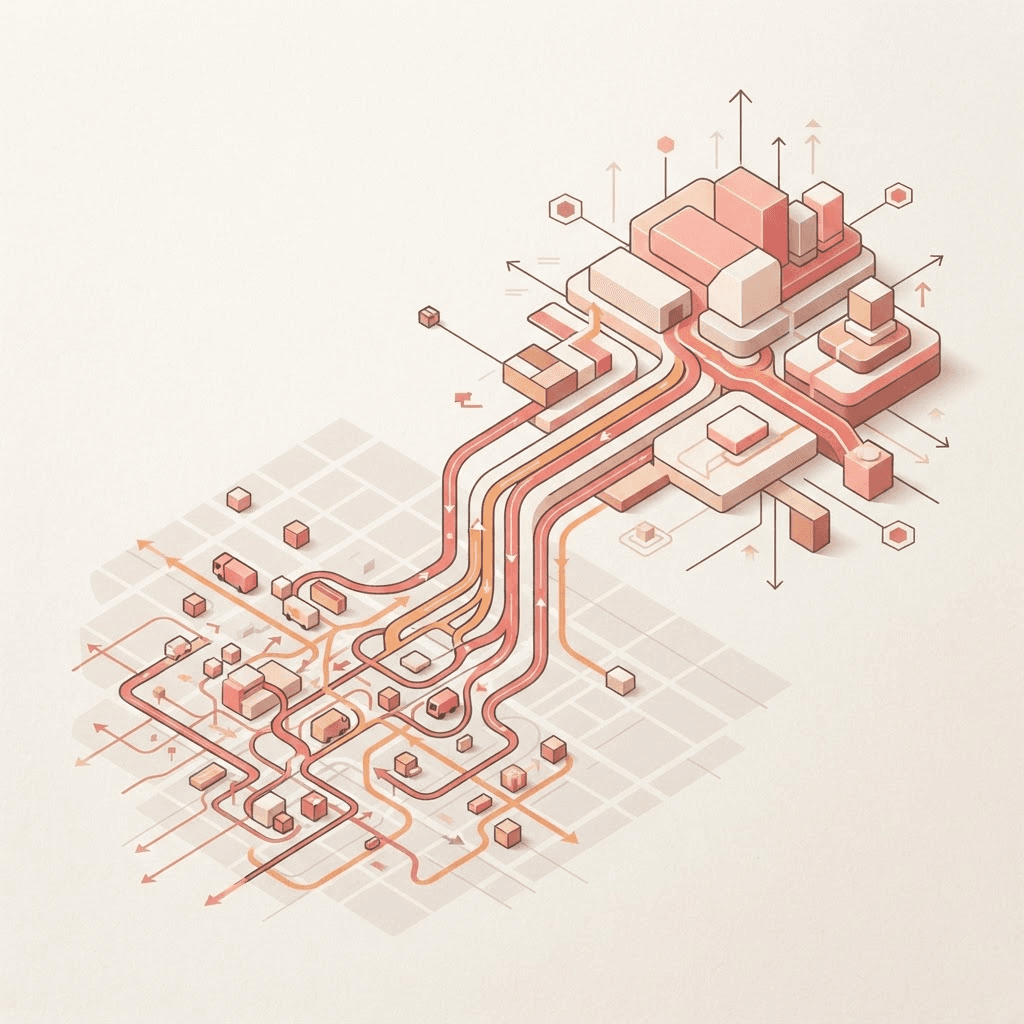
Last-mile delivery had grown as a set of manual, fragmented operations. To scale, it needed to become a product — a platform and mobile tooling that connected operations teams, delivery riders and customers on shared, reliable rails.
The people behind the problem
Riders were navigating the real world with tools that assumed the ideal one. Operations teams were stitching together spreadsheets and phone calls. Customers just wanted to know where their order was.
Every one of these groups was absorbing the cost of missing infrastructure.
Reframing the real problem
The instinct was to fix individual pain points. The real opportunity was to build a platform: shared services and mobile tools that turned ad-hoc operations into a repeatable, observable system.
That meant designing for the rider's on-the-ground reality first, then building the operational backbone around it.
Making progress from zero
This was a 0→1 effort. We launched a cloud logistics platform and an Android rider app with real-time resource tracking, delivery-status synchronization and digital proof of delivery, supporting both last-mile delivery and hyperlocal pickup.
I led delivery across 15 backend, UI and app developers, four QA specialists and two designers. We enabled wallet and card-on-delivery payments in one-third of the estimated time, and defined rider performance metrics so operations could manage the network with data.
Outcomes
- Around INR 1.5 crore in annual savings after launch
- 40% increase in delivery customer satisfaction
- Wallet and card-on-delivery payments enabled in one-third of the estimated time
- Real-time tracking, delivery-status sync and digital proof of delivery across last-mile delivery and hyperlocal pickup
Headline impact: ~INR 1.5 crore annual savings · 40% increase in delivery CSAT
Next case study
Learning AI by building it